
Iberian Orca Interactions 2025: What have we learned?
- Updated by Ann MacKellar
- 18 Dec 2025

In 2025, the Cruising Association introduced a monthly orca interaction location table (figure 1), based on data from the Grupo de Trabajo Orca Atlántica (GTOA) monthly interaction maps - the most comprehensive record of orca interactions (see www.orcaiberica.org). In order to support safer passage planning, the table helps skippers identify when and where interactions are most likely to occur in different locations throughout the year.
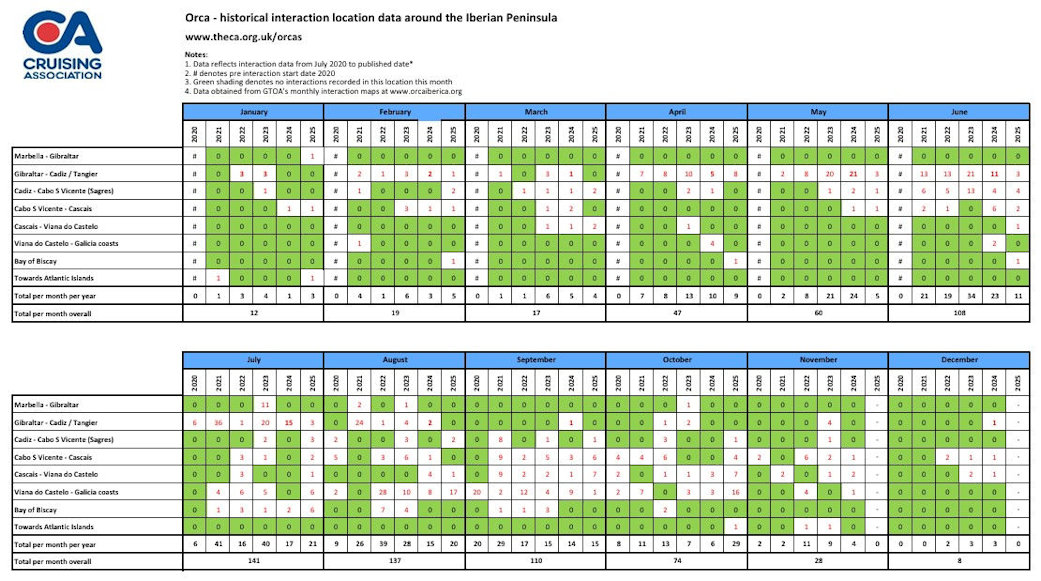
Figure 1 – Monthly Orca Interaction location table
This resource helps a skipper to forward plan a passage through the affected locations to reduce the risk of encountering orca. The table shows there are clear patterns, although trends are not entirely consistent from year to year and the risk cannot be entirely mitigated using this information. The pattern shows that in some months and locations interactions have occurred in large numbers and in others they have been largely absent.
Early in 2025, the raw data for May and June showed a sharp decline in interactions. This led to speculation on social media that orca behaviour had changed, and that they had perhaps grown bored of the ‘game’. Others questioned whether the growing use of ‘firecrackers’ and other loud noises had deterred some orca from engaging in interactions.
However, at the CA we could see from our monthly location table that the fall in numbers during these months related primarily to the sea area from Cadiz/Tangier to Gibraltar, where the tuna spawning run into (and later out of) the Mediterranean Sea is at its peak and where orca station themselves to await a tuna feast.
At an early stage in the CA orca project, our data supported the theory that almost no yachts were being attacked in shallow water. It has taken some time and a concerted effort by various organisations to get this news out to the vast majority of yachts traveling through this area on a passage into and out of the Mediterranean. CA analysis suggested that the decline in interactions in May and June 2025 may be linked to the increased use of the shallow water route along the south coast of the Iberian Peninsula, which has proven effective in significantly reducing risk.
Our suspicions seem to have been confirmed during the latter part of this year. By July, interactions in the Cadiz/Tangier/Gibraltar triangle remained well below average. However, numbers in several other sea areas were above the July average. We then witnessed a record number of attacks in the waters off Galicia for the month of October, suggesting that the Iberian orca were neither getting bored of the game nor scared away by loud noises.
There is no shallow water route around Galicia and the west coast of Portugal is often affected by Atlantic swell. Given the limited number of yachts sailing in shallow water in this area and given that very few take the time to submit a report to the CA we cannot properly assess whether doing so would reduce risk in this area.
Year-end data
By 16 December 2025, our yearly comparison table (figure 2) shows that the total number of recorded interactions stood at around 90% of the average since 2021 (excluding 2020 when the problem started). That slight overall reduction is only part of the story. We have seen interactions in the Cadiz/Tangier/Gibraltar Triangle at around 28% of the average, whereas the comparison table shows that in several other areas numbers have been similar to and somewhat higher than the previous years’ averages.
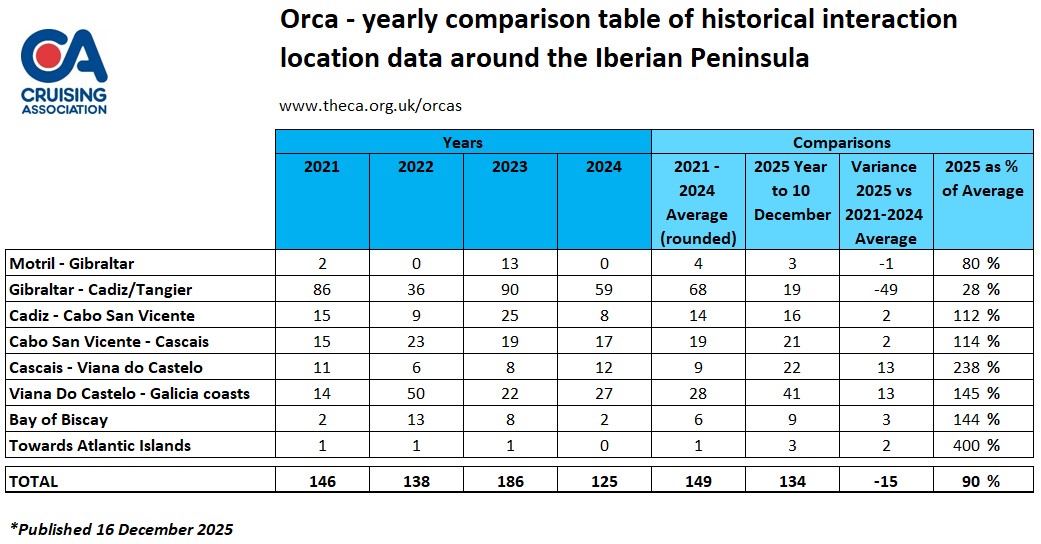
Figure 2 – Orca yearly comparison table for 2025
What this means for cruisers
So, unfortunately it seems that the initial optimism relating to the data from May and June this year was not well founded. The positive news is that those heading into and out of the Mediterranean continue to significantly reduce risk by using the shallow-water route to and from Gibraltar all year round.
It is also apparent that in April and May, and to a lesser extent June, when orca tend to be concentrated in the Cadiz/Tangier/Gibraltar area, passages around the Iberian Peninsula to the west and north of this area are much less likely to encounter orca. So, when heading towards or out of the Mediterranean during April and May the shallow water route can be used to skirt around the known orca hot spot and the risk outside of this area is greatly reduced. From July onwards, interactions appear more geographically dispersed with the associated wider spread higher risk of orca encounters.
Important caveats
- The shallow-water route to/from Gibraltar seems to be well used and effective, but there are shoals, fixed tuna nets and strong currents. It requires careful planning and favourable conditions.
- There is no zero-risk option.
- Orca movements change year to year. Even in lower-risk areas, vigilance is essential.
- Continue to monitor live updates through recognised sources, such as the GT Orcas app.
The CA will continue to update and share insight as new data becomes available at www.theca.org.uk/orcas.


