
Another successful Evening with RATS 2026
- Updated by Ann MacKellar
- 30 Mar 2026

The sixth Evening with RATS proved to be another successful and fascinating evening. There was good attendance at CA house in addition to 225 people joining online. Although the majority were UK based, attendees also viewed from United States, South Africa, New Zealand and several countries in mainland Europe.
The evening was introduced by Simon Hampton-Matthews Chair of RATS. He highlighted the many areas of work and specific topics investigated by RATS. Guidance is given rather than advice. He showed the distribution of questions that RATS responded to from members over the last 5 years with Brexit, VAT status and Orcas being frequent. He also highlighted the many benefits of CA membership for the recreational cruiser for potential members.
There were four excellent presentations on topics highly relevant to the cruising community 2026:
- Lithium Batteries: Power or Peril?
- Marine Communications: Should you install Starlink?
- Marked Gear Safe Gear – the lobster pot campaign renewed
- When Abroad: making sure your kit is legal
Lithium Batteries: Power or Peril?
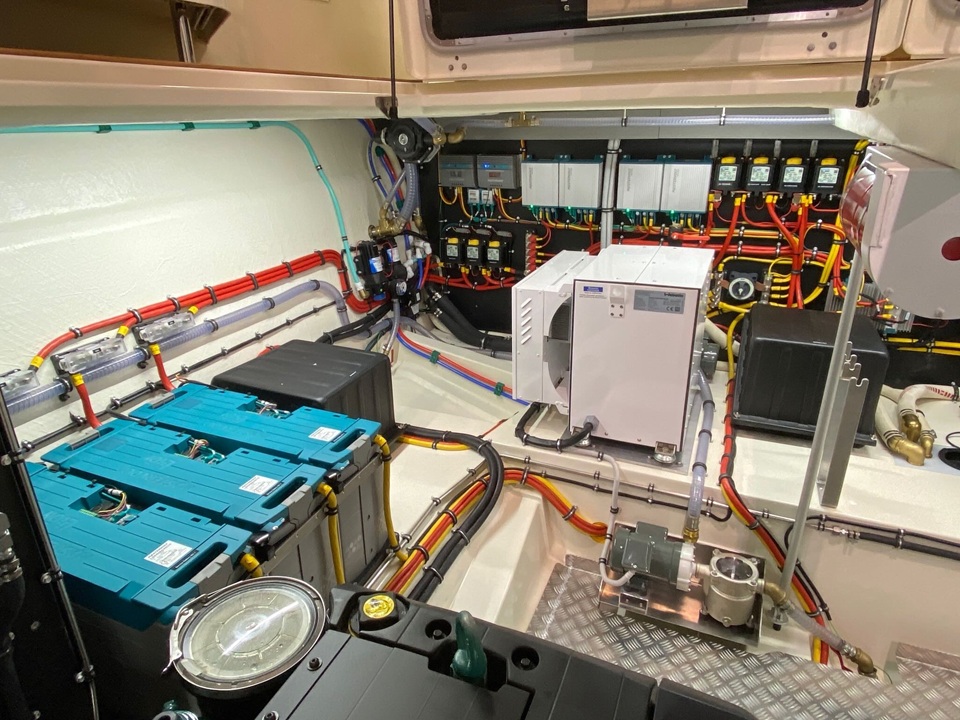
Rick Ballard discussed the increasing use of lithium battery systems on cruising boats, both as main battery systems but also with the increasing use of lithium powered personal ‘toys’ including e-bikes and scooters.
He highlighted the importance of distinguishing between the more stable Lithium Iron Phosphate battery (LiFePO4 - LFP) usually used as house batteries on boats and some outboard batteries, and the many different Lithium-ion batteries used in personal items on board. LFPs have the advantage of being able to discharge deeply down to 10% without reducing battery life (vs 50% in lead acid batteries) and also charge again more quickly.
The main risk of lithium batteries is that of fires that are difficult to contain and extinguish. It is generally acknowledged that LFP batteries are safer that lithium-ion batteries based on other chemistries, but the risk still must be considered. The faster charging of LFP batteries results in higher charging currents and this create a risk to the charging circuitry if they are installed without consideration of the whole system, including battery management system, alternator capacity, wiring and fuses.
Rick described how insurers are evolving their policies, but many are now often asking that self-installed systems should be certified by a ‘qualified marine electrician’, that lithium-ion batteries are only charged whilst crew are on board, and that specific AVD extinguishers (Aqueous Vermiculite Dispersion) should be available on the boat. These extinguishers work well for small batteries, yet for larger batteries the numbers of such extinguishers needed is probably not realistic for small cruising boats. For all new installations whether DIY or by a marine electrician the standard to adhere to is ISO 2365.
As part of its ongoing work in this area the RATS team is involved in a joint working group with the Inland Waterway Association. The group is investigating available information from which to develop guidance and standards for DIY installations acceptable by insurers.
Marine Communications: Should you install Starlink?
Robert Sansom discussed the evolution of early radio communication through to the geostationary satellites of the 1970s, with their low bandwidth and large latency, to the current Starlink developed in 2020s. This uses low earth orbit satellites and currently there are over 9,000 satellites in orbit. This provides for broadband bandwidth and low latency. There are currently over 10 million subscribers worldwide.
The hardware features either the standard system with the dish often mounted on the stern of the boat, or the cheaper and smaller Starlink mini which can be installed in a hatch window and run off a modest-size solar panel.
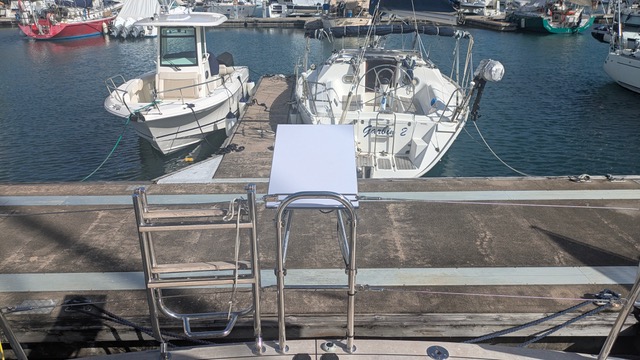
Different plans are available according to use – the cheaper ‘Roam’ option is available for up to two months of use outside of the home country, whereas the ‘Global Priority’ plan is available anywhere at sea. For flexibility can switch to standby mode on a monthly basis.
Robert discussed how such accessibility has significant benefits to cruising sailors allowing timely access of weather forecasts, video communications with shore, WhatsApp groups and access to technical support. However, he highlighted that ready access to social media means high data usage and is not always wanted. An important consideration is that it can detract from crew interactions and distract.
Currently Starlink is the only system that currently provides this capability, but Amazon Leo is expected to start later this year.
Marked Gear Safe Gear – the lobster pot campaign renewed
Ian Wilson discussed the background and statistics related to entanglements in UK waters. Since 2017 there have been more than 1000 entanglement related callouts. The RYA has had an electronic reporting system since 2018.
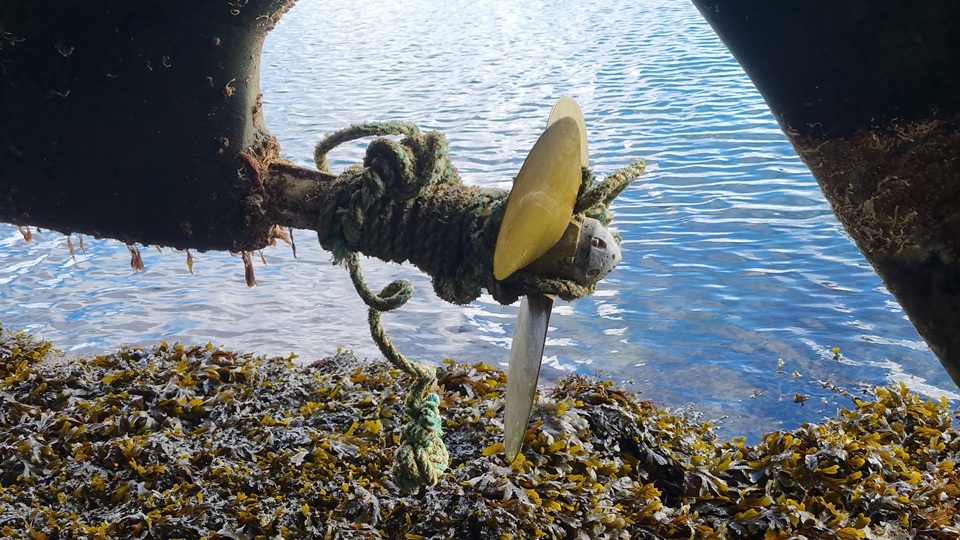
Following a petition in 2018, the MCA convened a working group, but sadly the report in 2025 did little to actually address the hazard. We only have the same voluntary guidance in England. In Scotland, however, the marking of creels order was implemented in 2020. This stated that a marker buoy made for the purpose, must be used. This contrasts with pots in England where some are poorly visible, marked only with cans and other marine debris. Ian discussed how the campaign has been revived with a clear new campaign message of Marked Gear = Safe Gear.
He hopes that this campaign will encourage the collection and publishing of data on poorly marked pots, highlight high risk locations with the use of a heat map of reported locations and advocate for government regulation of the marking of static fishing gear.
The campaign begins on 8th May 2026 and asks that we all report any entanglements or badly marked pots on the RYA site.
Ian is also asking for any photos showing entanglements of badly marked pots or the results of entanglements to be sent to lobsterpots@theca.org.uk He would be grateful for any support from influencers or celebs you happen to know or for a volunteer to help with a social media campaign.
When Abroad: making sure your kit is legal
Roger Bickerstaff discussed requirements when travelling abroad from the perspective of UK boats leaving UK territorial waters, and the requirements to maintain compliance with UK regulations, as well as the laws of the country you are visiting.
He discussed the right of ‘innocent passage’ meaning that a boat should not be interfered with when continuing their journey uninterrupted through territorial waters. This is no longer applicable though when a vessel stops to anchor or enter the internal waters of a country. It is important then to comply with the port regulations, environmental rules, local navigation laws and custom and immigration controls of the country you are visiting, as well as your own state rules.
In the UK there is currently no requirement to demonstrate competence when sailing, but many skippers do hold recognised RYA qualifications. The International Certificate of Competence (ICC) is the only international evidence of recreational boating compliance in Europe and is recognised by 22 countries and compulsory in a few. For inland waterways in France the ICC is required with a CEVNI validation, but other countries require that only for vessels over 15m.
Roger stressed the importance of carrying the correct range of documentation including registration and insurance documents, passports and personal documentation, ICC/ CEVNI as applicable, proof of payment of duty on diesel and safety certificates and records for equipment on board. Proof of VAT status and evidence of location on 31st December 2020 are particularly important. Requirements for paper or electronic charts do vary between countries hence the importance to check requirements in advance of a cruise.
He also described variation amongst individual countries as to safety requirements, including whether a life raft is required, the requirement for in date flares and acceptability of electronic flares. For some countries an EPIRB or PLB is mandatory when over 60 miles offshore. Fire equipment requirements vary, for example France and Belgium require these to be serviced, checked and certified every two years. ATIS (Automatic Transmitter Identification System) needs to be enabled if in European inland waterways but disabled in UK. The clear message was to be aware and read up on the requirements for countries in advance.
Questions posed after the presentations
Clarification was given that it is better to register Starlink locally to where you are sailing to reduce costs; reports of entanglements should be posted for the whole of UK including Northern Ireland; the ISO standard for lithium batteries is available on line – cost about £90; there are no legal requirements for flares in UK vs mandatory in some other countries; discussion as to why pot marking not consistent; LFP batteries dimensions are similar to lead acid batteries, but will be lighter.
Video recordings
For those who were unable to join this event, a recording of the talks will be available on website when available, but excluding the Q&A session that followed.


